Managing shift changes manually creates a predictable set of problems: supervisors fielding calls at short notice, compliance checks done informally or not at all, and agency spend climbing whenever a vacancy cannot be filled quickly from within. Shift swapping is highly common in industries with variable, 24/7, or hourly schedules, such as healthcare, retail, and hospitality.
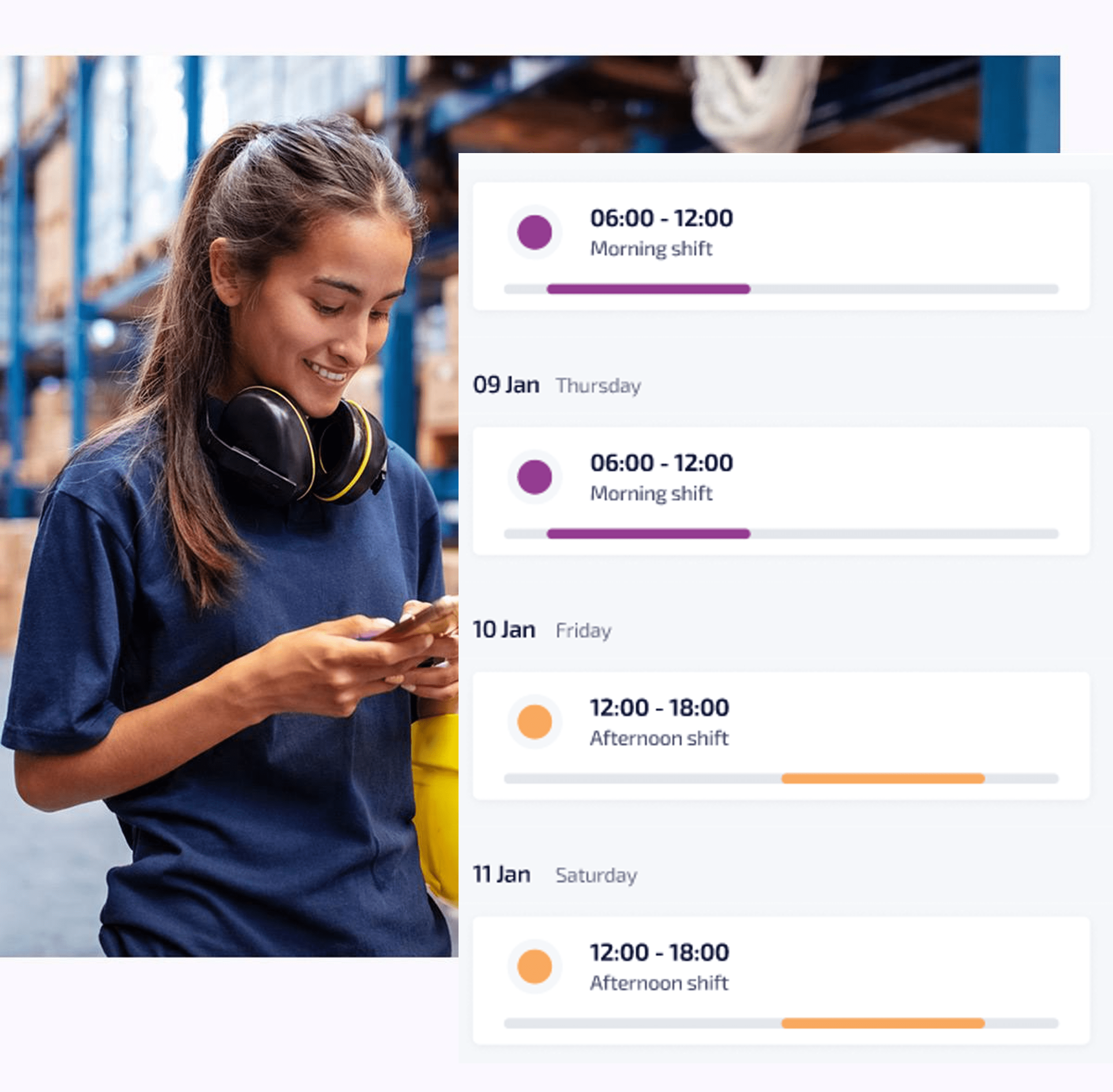
Totalmobile’s staff rostering app puts shift swapping and open shift claiming directly in the hands of employees and scheduling staff, so changes are handled through the system rather than around it.
Key Features of Shift Swapping Software
Improve scheduling efficiencies across your entire team
The benefits include:
For employees
- Direct control over swap requests and shift availability without needing to contact a manager
- Visibility of available shifts and the ability to claim additional hours through the app
- Faster resolution of requests with clear outcomes rather than informal arrangements
- Better work-life balance through a structured, transparent process
- Higher job satisfaction and employee satisfaction, as employees with shift swapping flexibility report greater morale and engagement
- A clear shift swap policy gives employees room to breathe when plans change, leading to a more engaged workforce
- Shift swapping can lead to stronger team camaraderie as employees support each other during personal emergencies


For operations and HR teams
- Reduced admin burden as requests are handled through the system, not through calls and messages
- Compliance context available at the point of every approval decision
- Automatic schedule and timesheet updates with no manual reconciliation
- Shift swapping can significantly reduce no-shows, boosting productivity and revenue
- Having a shift-swapping policy ensures everyone’s needs are considered, creating a more productive and satisfying working environment
- Helps maintain staffing levels during peak hours, ensuring consistent customer service
What’s the ROI on shift scheduling software?
Shift swapping and open shift claiming are part of Totalmobile’s wider workforce scheduling capability. To see how they work alongside automated rostering, time and attendance tracking, and real-time workforce visibility, explore our manufacturing rostering solution.
Shift Swapping Software FAQs
What is shift swapping?
Shift swapping is the process by which two employees exchange their scheduled shifts. This is also known as a shift trade or trading shifts. One employee submits a swap request through the rostering app, which is then accepted by a second employee (the other employee). The formal process requires managerial approval before the schedule updates, ensuring compliance and accountability. Both employees retain their contracted hours as a result of the exchange.
What are the best practices for shift swapping?
Best practices for shift swapping include setting clear rules on eligibility, request processes, and deadlines to avoid confusion. Using an automated system rather than informal communication ensures all requests are tracked, approved, and compliant with working time regulations. Providing training and regular reminders helps employees follow the correct process, while requiring advance notice gives managers time to review requests without disrupting operations. Finally, approved swaps should automatically update schedules to maintain accurate records and prevent gaps in coverage.
What is open shift claiming?
Open shift claiming allows employees to see and express interest in available shifts published by a manager. For example when a shift becomes vacant through absence or when additional hours are needed. It gives the existing workforce first access to available hours before agency cover is considered.
How does shift swapping work in the Totalmobile app?
Employees initiate swap requests directly through the staff rostering app on iOS or Android. Swapping schedules involves a formal approval process, and advance notice of 24 to 48 hours is often required to allow for proper review. The request is presented to the manager with the relevant compliance context already displayed. Once approved, the schedule and timesheet records update automatically and both employees are notified.
Does shift swapping help with compliance?
Yes. Because swap requests are managed through the rostering system rather than informally, the manager reviewing each request can see the employee’s current hours, rest period status, and Working Time Directive obligations at the point of approval. Swaps that would cause an employee to exceed their maximum weekly hours are typically prohibited, and the policy includes clear rules and thresholds understood by shift workers, managers, and those responsible for workforce management. This means compliance is assessed before the change is confirmed rather than audited afterwards.
Is shift swapping suitable for manufacturing environments?
Yes. The app is designed for on-site, shift-based workforces where employees are not desk-based. Swap requests and open shift claims are handled through the mobile app on iOS or Android, and every change is validated against the organisation’s compliance obligations before being confirmed. Shift swapping policies must also consider the impact on employee health and fatigue, ensuring that swaps do not lead to excessive hours or disrupt sleep patterns.
What should a shift swapping policy include?
A well-defined shift swap policy should include a formalised approval process to prevent extra labor costs and worker no-shows, as well as disciplinary procedures for failing to comply with the policy. Companies should set reasonable expectations for employees and managers regarding shift swapping to ensure everyone is comfortable with the process. It is important to note that shift swapping can lead to legal and reputational risks if the policy does not provide defined parameters and governance around swap requests and approvals.