
Maintenance Software in Field Service
Streamline your field service operations and maximise asset performance with advanced maintenance software. From scheduling work orders to tracking inventory, maintenance management solutions helps teams reduce downtime, improve efficiency, and deliver reliable service at every stage of the maintenance lifecycle.
What is Maintenance Software?
Maintenance software, also called maintenance management software, is a digital solution that helps organisations organise, plan, track, and analyse maintenance activities. It provides visibility across all maintenance processes, enabling field service teams to work more efficiently, reduce errors, and improve the lifespan and reliability of assets.
By replacing paper-based workflows and spreadsheets, maintenance software ensures that work orders, inspections, and preventive tasks are completed on time, with accurate reporting for managers and executives.
Maintenance software can range from simple work order tools to sophisticated systems like Computerised Maintenance Management Systems (CMMS) and Enterprise Asset Management (EAM) solutions.

Types of Maintenance Software
Different maintenance software solutions are designed for various levels of complexity and organisational needs. Key types include:
CMMS (Computerised Maintenance Management System)
CMMS software manages day-to-day maintenance tasks such as scheduling, work order tracking, inventory control, and record keeping. It helps field teams reduce downtime, streamline preventive maintenance, and maintain detailed asset histories.
EAM (Enterprise Asset Management)
EAM solutions provide a complete view of asset lifecycles, from installation to decommissioning. EAM combines maintenance scheduling, compliance tracking, and financial reporting to optimise overall asset performance.
Preventive Maintenance Software
Preventive maintenance software automates recurring maintenance tasks, creates triggers for inspections, and ensures assets are serviced before failures occur.
Preventive Maintenance Software
Scheduling tools help allocate resources efficiently, minimise travel time, and improve first-time fix rates by coordinating workforce availability and skill sets.
What Can Maintenance Software Do for Your Business?
Maintenance Software is helpful in field service delivery for the following key reasons.

Reduces Downtime
Maintenance software boosts productivity by ensuring equipment is available at the right time and maximises the functional operation of assets when needed. Travel for reworking or inefficient follow-up maintenance disappears, saving an organisation valuable time and operational costs.

Improves First-Time Fix Rate
Maintenance software solutions provide an all-in-one solution for work scheduling, tracking operatives and managing inventory to decrease no-access appointments or lack of resources. This control level is critical when skills shortages arise or legislative changes occur. CMMS can integrate with systems operating alongside daily operations such as communication and invoicing to manage contractor relationships. By doing this, CMMS can ensure equipment, components, operatives, or contractors are continually available to match demand and increase productivity.

Record Asset History
Understanding an asset’s past goes a long way toward explaining its present and future performance. Maintenance software enables ongoing logging and reporting of issues while providing a platform to record inspections with individualised images, videos and notes. Inspection logs can inform root cause analyses to offer bespoke maintenance solutions and schemas for each asset. Field technicians can rely on this bank of historical records and asset resources to see how problems were solved in the past, empowering them to make quick repairs which minimise downtime.

Controlling Costs & Inventory
Maintenance software gives an organisation an unprecedented view of all maintenance activities across multiple departments and geographies. Visibility enables greater cost control in several ways. Reducing labour expenses is possible thanks to maximising technician productivity in the field. Greater productivity during working hours reduces overtime expenses and the need to hire additional workers to meet demand. Inventory tracking and automation reduce the need to order parts and spares for low-priority or low-demand tasks.
Who Uses Maintenance Software?
Maintenance software supports multiple roles across an organisation:
-
Maintenance Managers: Schedule work, assign tasks, track compliance, and plan preventive maintenance.
-
Technicians: Access work orders, log inspections, record asset conditions, and update progress in real time.
-
Operators: Submit requests, monitor equipment, and track maintenance schedules.
-
Inventory Managers: Manage parts and spares, set thresholds, and automate reordering.
-
Executives: Analyse maintenance KPIs, plan budgets, and integrate asset performance into overall business strategy.
What is CMMS?
A CMMS (Computerised Maintenance Management System) is a specialised form of maintenance software designed to manage all maintenance activities across assets.
Core CMMS functions include:
-
Automated work scheduling and task assignment
-
Inventory and spare parts tracking
-
Logging maintenance history, inspections, and repairs
-
Generating reports and dashboards for actionable insights
CMMS is ideal for field service teams that need a structured, digital approach to asset management and preventive maintenance.
What are the differences between CMMS and EAM?
CMMS, confusingly, is sometimes used as a synonym for Enterprise Asset Management (EAM). Both EAM and CMMS share very similar objectives but have a different scope. CMMS established the foundation for EAM with the functions of these two systems of maintenance management overlapping. EAM, thanks to more excellent connectivity and the ability to share information far and wide, can foster deeper collaboration across departments and sites while integrating into other systems more effectively.
EAM solutions have a broader business context which considers overall asset lifecycle, process management, risk compliance, asset disposal and comprehensive financial analysis. CMMS solutions typically focus on fixed asset availability and labour scheduling, as well as managing labour and resources. CMMS also provide inspection and historical asset resources and on-demand report and audit generation, an invaluable tool for technicians.
Why Totalmobile?
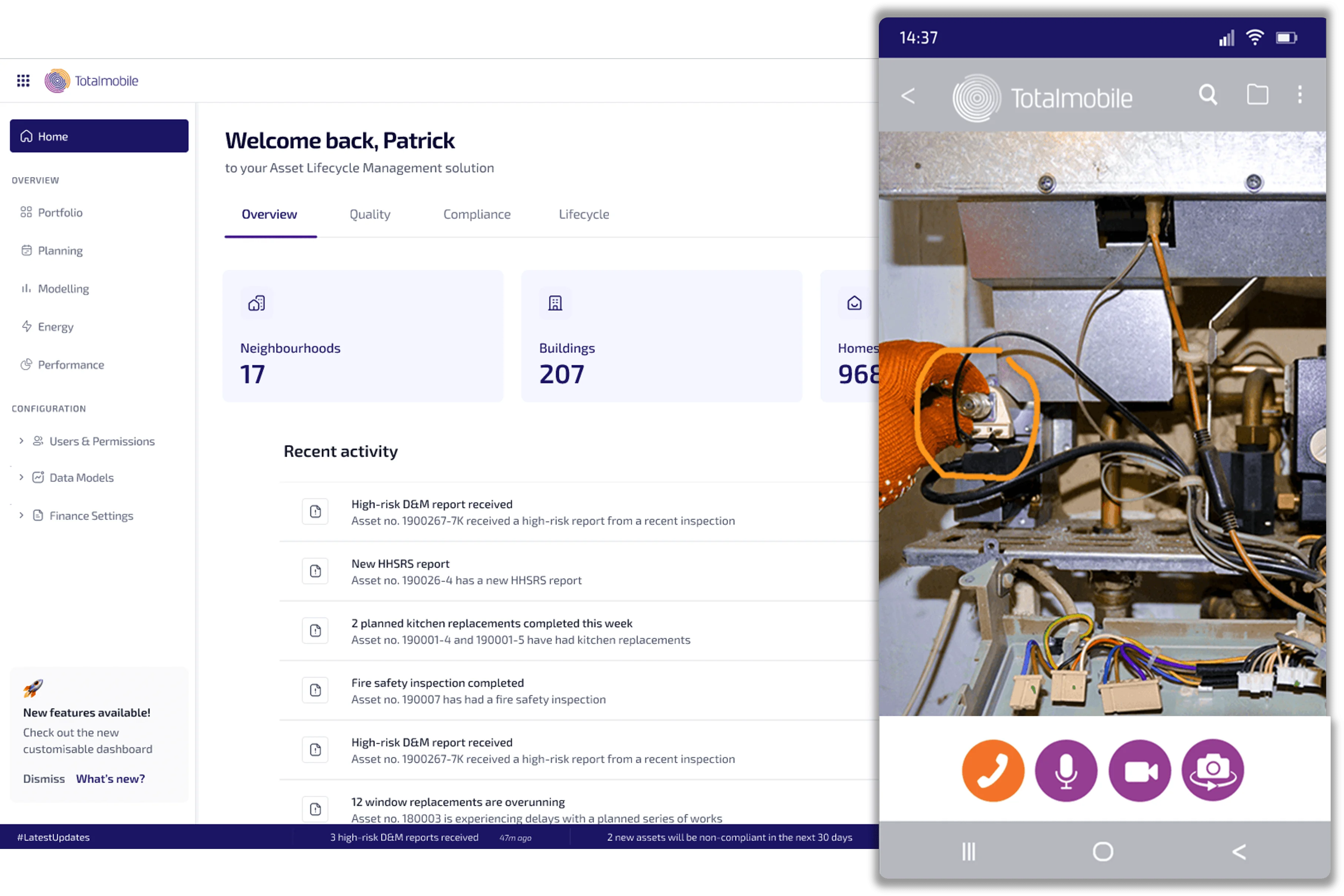
- Real-Time Visibility: Track all maintenance activities across teams and sites.
-
Intelligent Scheduling: Optimise technician allocation and reduce travel time.
-
Asset History & Reporting: Capture inspection logs, work history, and generate compliance reports.
-
Mobile Workforce Enablement: Allow field teams to access and update information on the go.
-
Preventive Maintenance Automation: Ensure assets are serviced before failures occur.

Maintenance Software FAQs
What is CMMS?
CMMS (Computerized Maintenance Management System) is an industrial computer or software system created to simplify maintenance management in delivering field service. CMMS may include the management of work orders and the planning and execution of preventive maintenance.
What are the differences between CMMS and EAM?
EAM and CMMS (Computerized Maintenance Management Systems) are solutions to manage assets and maintenance for the responsible organisation. EAM systems look at larger-scale operations, covering multiple sites, geographies and departments. CMMS focuses on small-scale, single-site applications.
What is downtime?
Every industry with operations primarily based in the field can benefit from using CMMS Software. Field service organisations require work to be completed both occasionally and repeatedly. A fully featured CMMS System can help organise those individuals responsible for managing field assets effectively.
What is Work Order Management?
Work Order Management software aids in the communication and management of daily tasks. Work order management software enables service management to effectively track and manage complete sets of work order information through a single platform. Centralising service requests, real-time status updates, and task completion allow location or facility managers to manage work orders across a multi-location, multi-region enterprise easily.