Managing rotas for nurses, carers, and clinicians used to mean spreadsheets, last-minute phone calls, and scrambling to fill gaps with costly agency staff. Healthcare staff scheduling software helps automate these processes while supporting the wider delivery of care. The result is more time for what matters most: delivering high-quality patient care.
Streamline healthcare rotas and cut staffing costs fast
Healthcare staff scheduling software saves hours of admin each week and reduces reliance on expensive agency workers, while improving visibility across your workforce.
Healthcare organisations can achieve:
- Increased patient-facing time: Frontline staff can deliver more care hours per shift
- Optimised scheduling and coverage: Match care workers to patient needs and reduce missed visits
- Ensured compliance: Maintain auditable records for regulators such as the CQC
- Supported staff well-being: Reduce unnecessary travel and administrative workload
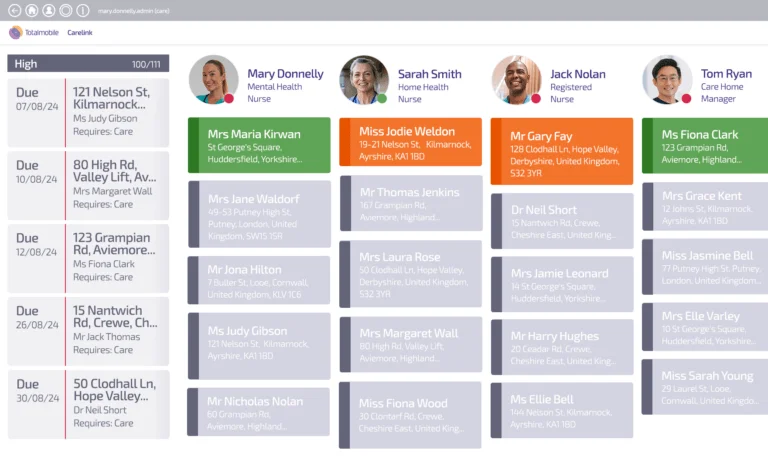
Modern scheduling tools let managers build compliant rotas in minutes rather than days. Set rules once—safe staffing levels, skill mix requirements, and rest periods—and the system handles the rest. Automatic conflict alerts flag double-bookings or missing breaks before publishing.

Key features for daily operations:
- Drag-and-drop rota building
- Recurring shift templates for common patterns (12-hour shifts, 4-on-4-off)
- Built-in labour cost estimates per shift
- Overtime alerts when approaching budget limits
Frontline staff also benefit from improved visibility and control. Instead of paper rosters, healthcare workers can:
- View upcoming shifts
- Request time off
- Swap shifts with colleagues
- Confirm availability through mobile apps

Support mobile healthcare teams in the field
Healthcare delivery doesn’t happen behind a desk. Community teams, homecare workers, and clinicians need access to the right information wherever they are.
Healthcare staff scheduling software, as part of a wider workforce and care management platform, supports mobile teams by:
- Providing real-time access to schedules, care plans, and notes
- Allowing staff to update records at the point of care
- Reducing unnecessary travel and repeat visits to base
- Improving communication between teams and coordinators
This enables clinicians to spend more time with patients and less time on admin or travel.
Proven outcomes for healthcare providers include:
- 165 extra visits per-nurse per-year
- 15% reduction in staff visits to base
- Reduction in travel time
Coordinate nurses, carers, and clinicians across multiple sites
Scheduling across hospitals, clinics, care homes, and community services presents unique challenges. Staff may need to move between locations, and coordinators often spend hours trying to piece together coverage.
Healthcare scheduling software centralises rotas while allowing site-level flexibility, giving full visibility across the organisation.
Concrete tools for multi-site coordination:
| Feature | What It Does |
|---|---|
| GPS/geofenced clock-ins | Confirms staff are at the correct location |
| Role and skill-based matching | Ensures appropriately qualified staff are assigned |
| Rule-based assignment | Matches staff qualifications to requirements |
| Real-time dashboards | Shows who is on shift by ward, clinic, or route |
This real-time visibility helps teams respond quickly to changes in demand, whether that’s increased patient volume or unexpected absences. Shared notes and handovers also improve continuity of care.
Set Your Healthcare Organisation Up for Efficient Growth
Smarter scheduling supports sustainable growth across GP practices, hospitals, and care providers. Whether managing 10 staff or 300+ employees across multiple sites, the right system scales with your organisation.
Forecasting tools use historical data—seasonal demand, patient volumes, and workforce trends—to help predict staffing needs in advance. This allows managers to plan proactively rather than reacting to shortages.
Budget and labour-cost dashboards provide real-time visibility, helping organisations:
- Control overtime spend
- Identify inefficiencies
- Allocate resources more effectively
Digital timesheets and automated approvals also streamline payroll processes, reducing admin and improving accuracy.
What Is Healthcare Staff Scheduling Software?
Healthcare staff scheduling software is a digital platform used to plan, assign, and manage shifts for clinical and non-clinical staff, while ensuring compliance with healthcare regulations and patient demand.
It replaces spreadsheets and manual processes with a centralised system designed for the complexity of 24/7 healthcare operations.
How Healthcare Staff Scheduling Software Works
A typical workflow follows five core steps:
- Configure staffing rules (roles, hours, skills, compliance requirements)
- Collect staff availability via mobile or web
- Auto-generate rotas based on defined rules
- Publish schedules instantly to staff devices
- Track attendance and adjust in real time
Staff profiles store roles, qualifications, and preferences, enabling smarter scheduling decisions and reducing manual effort.

Key benefits of healthcare staff scheduling software
Cost and pricing model
Common pricing models include:
- Per-user/month
- Per-location/month
- Enterprise pricing for larger organisations
Additional costs may include implementation, training, and integrations.
ROI tip: Even a 15–20% reduction in admin time, overtime, or agency spend can justify investment within 12–18 months.
Healthcare Staff Scheduling Software FAQs
How long does the implementation of healthcare scheduling software take?
Implementation typically takes between 4–12 weeks depending on the size and complexity of the organisation. Smaller clinics can go live faster, while larger healthcare providers may roll out scheduling software in phases across departments or locations.
Can healthcare scheduling software manage multiple locations?
Yes, healthcare staff scheduling software supports multi-site workforce management with central oversight and site-level flexibility. Managers can view staffing levels across hospitals, clinics, and community settings, making it easier to allocate resources where they are needed most.
Is healthcare scheduling software secure?
Yes, leading healthcare scheduling platforms comply with GDPR and industry security standards such as ISO 27001. They use encryption, role-based access controls, and audit logs to protect sensitive staff and organisational data.
Will staff use healthcare scheduling software?
Adoption is typically high when the software is easy to use and delivers clear benefits for staff. Features like mobile access, shift swaps, and real-time updates reduce admin burden and give employees more control over their schedules.
What is the best scheduling software for healthcare?
The best healthcare scheduling software depends on your organisation’s size, complexity, and compliance requirements. Healthcare providers should prioritise solutions that support workforce scheduling, mobile working, and care delivery, rather than generic tools designed for simple appointment booking.