

Field engineer schedules rarely go to plan.
Engineers call in sick. Jobs take longer than expected. Emergency work appears with no notice. And all the while, service level agreements (SLAs) still need to be met.
For organisations managing field engineers at scale, the real challenge isn’t creating a schedule. It’s keeping it intact when conditions change. This is where modern field engineer scheduling software plays a critical role, not just as a planning tool, but as an operational control system.
The key features of scheduling technology, such as real-time job allocation, automated rescheduling, and mobile workforce tracking, enable it to handle disruptions and maintain service continuity.
A primary benefit of modern scheduling systems is efficient scheduling, which ensures optimal resource utilisation, rapid response to changes, and improved SLA compliance.
What are field service teams and field technicians?
The field service team is the backbone of any service-driven organisation, made up of skilled field technicians who interact directly with customers and represent the company on every job. These technicians are responsible for carrying out a wide range of tasks, from routine maintenance to complex repairs, and their performance has a direct impact on customer satisfaction.
Field service management software plays a pivotal role in supporting these teams by ensuring that each job is assigned to the right technician, based on their skills, availability, and proximity to the customer. This intelligent job assignment helps eliminate scheduling conflicts and ensures that the right technician arrives at the right job with the right tools and information. Real time communication between field technicians and office staff is facilitated through the software, allowing for instant updates on job progress, quick resolution of issues, and seamless coordination across the field service team.
By equipping field technicians with mobile access to job details and resources, organisations can boost engineer productivity, reduce delays, and enhance the overall customer experience. The result is a more efficient, responsive, and customer-focused field service operation that consistently delivers high-quality service.
Why disruption is the real test of field engineer scheduling
Most scheduling approaches assume a stable day:
- engineers available as planned
- jobs completed within estimated durations
- no unexpected call-outs or priority changes
In reality, field operations are dynamic. Schedules are constantly under pressure from:
- unplanned absences
- job overruns
- reactive or emergency work
- changing customer availability
- tightening SLA commitments
When schedules are managed manually, or through static planning tools, these disruptions quickly cascade into missed appointments, inefficient travel, inability to optimise routes, failure to minimise travel, and SLA breaches.
Modern scheduling software is designed specifically to absorb this disruption, and to adapt off the back of it. It helps ensure efficient routes for field engineers, optimising routes and minimising travel to boost productivity and operational efficiency.
Assigning the right engineer, even when plans change
At the heart of scheduling disruption is one recurring decision: who should do the work now?
When conditions change, planners need to reassess assignments based on:
- skills and qualifications
- location and travel time
- job priority and SLA impact
- current workload and availability

Job scheduling software streamlines the process of assigning jobs and managing technician schedules by enabling planners to efficiently allocate tasks, coordinate field technicians and office staff, and ensure the right personnel are dispatched with the necessary tools and parts.

Intelligent scheduling software supports this by continuously reassessing the plan as new information arrives. Instead of relying on fixed routes or manual reshuffling, planners can see the downstream impact of change before committing to decisions.
This is especially important in environments where:
- engineers support multiple job types
- compliance or certification matters
- service delivery is tightly regulated
The goal isn’t automation for its own sake. It’s giving planners confidence that the revised schedule still works operationally.
Managing job overruns without breaking the day
Job overruns are one of the most common causes of scheduling failure.
A single task running long can:
- delay follow-on appointments
- increase travel inefficiency
- put multiple SLAs at risk
Effective field scheduling tools allow planners to respond in real time by:
- identifying knock-on impacts early
- rebalancing work across the team
- prioritising jobs with the highest service risk
- Instead of reacting after the fact, scheduling becomes proactive, helping organisations recover the day rather than write it off.
Handling unplanned absence and workforce rescheduling
When an engineer calls in sick, or when managing annual leave and other planned absences, the problem isn’t just replacing capacity. It’s doing so without compromising service commitments.
Field scheduling software supports workforce rescheduling by making availability visible and actionable:
- unavailability is recorded centrally
- alternative resources can be evaluated quickly
- planners can model changes before confirming them
- work can be reallocated across multiple teams and other resources, such as equipment or vehicles, as needed
This reduces the reliance on ad-hoc phone calls or spreadsheet-based replanning, which often leads to suboptimal decisions under pressure.
For managers, this visibility is critical. It ensures rescheduling decisions are defensible, auditable, and aligned with service priorities.
Protecting SLAs when the schedule is under pressure
SLAs don’t disappear when plans change. If anything, disruption makes them harder to meet.
Modern scheduling software helps protect SLAs by:
- surfacing which jobs are most at risk
- prioritising work based on contractual commitments
- supporting informed trade-offs when not everything can be done

Service scheduling ensures that service requests are prioritised and managed effectively, enabling efficient service delivery even under pressure.
Rather than treating SLAs as a reporting metric after the fact, they become an active input into scheduling decisions throughout the day.
This outcome-led approach is particularly important for organisations operating in public services, utilities, facilities management, and other customer-critical environments.
Balancing human control with optimisation
One of the biggest misconceptions about scheduling software is that it removes human judgement.
In reality, selecting the right software is crucial. Look for a solution that offers seamless integration with your existing business tools, supports automation, and still allows for manual intervention when needed.
Intelligent scheduling software is most effective when it:
- supports planners with data-driven recommendations
- allows manual intervention where local knowledge matters
- makes the impact of decisions transparent
This balance between human control and optimisation is what enables teams to trust the system, especially in high-pressure situations where disruption is unavoidable.
Why this matters for organisations evaluating scheduling software
For managers shopping for scheduling systems, it’s tempting to focus on features: drag-and-drop planning, mobile apps, or route optimisation. Field service businesses benefit most from field service scheduling software that offers mobile accessibility, a dedicated mobile app, and GPS tracking, enabling real-time updates, efficient technician dispatch, and seamless operation across devices.
But the real differentiator is how the system performs when things go wrong.
The ability to:
- absorb disruption
- recover schedules quickly
- protect SLAs
- maintain operational visibility
- automate repetitive tasks to cut costs and achieve reduced costs for the organisation
This is what separates basic scheduling tools from enterprise-grade scheduling technology.
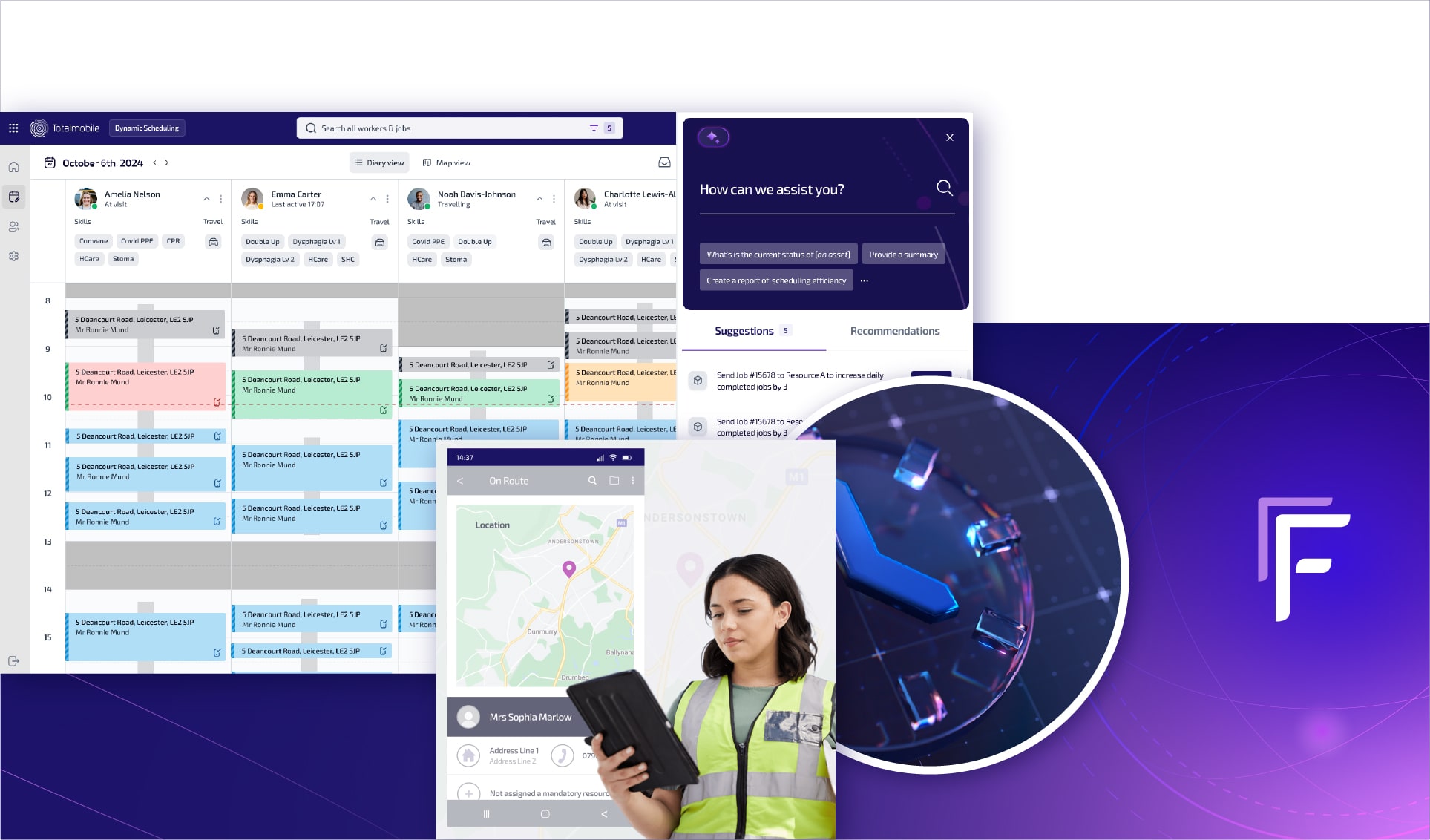
Field engineer scheduling as part of a wider operational system
Scheduling doesn’t exist in isolation.
To be effective, it needs to operate as part of a wider field service or mobile workforce management ecosystem — connected to job management, mobile working, and real-time operational data. Integration with parts availability and streamlined handling of service calls further enhances the effectiveness of the scheduling system, ensuring technicians have the right resources and information to complete jobs efficiently.
This integrated approach is what allows organisations to move from reactive firefighting to controlled, resilient service delivery.
What can engineer scheduling tools deliver for your organisation?
Organisations using our engineer scheduling software can achieve:
- Jobs completed 35% quicker than before
- Reduced CO2 emissions
- Productivity increase of 15% across the workforce
- 25% reduction in operational staff costs