

Managing a job is one thing. Managing hundreds of connected jobs, across multiple months, teams, locations and subcontractors, is something else entirely. For organisations delivering planned maintenance, refurbishment, infrastructure or other long-running programmes, the skill isn’t in simply completing individual jobs, but in balancing the complexities of multiple jobs to ensure a cohesive programme of work delivered on-time, within budget and scope.
Are we on schedule? Are costs in line with our expectations? Which jobs are sitting with subcontractors? What can we invoice? And, ultimately, are we delivering the programme we committed to?
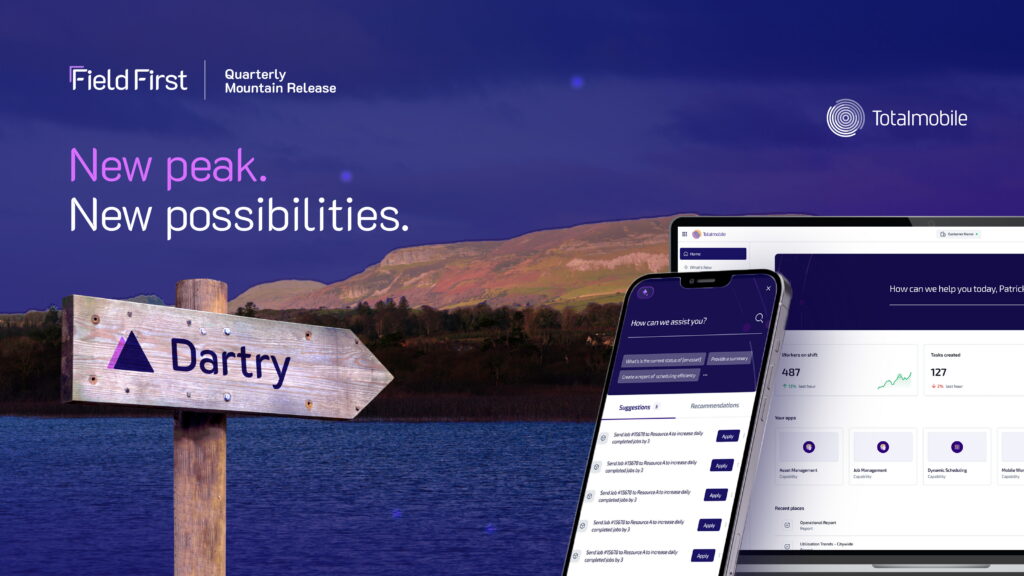
These are just some of the everyday challenges of managing long-running programmes of work. That’s where the latest Programmes of Work enhancement announced in Field First: Dartry comes in.
With end-to-end work-order management for long-running Programmes of Work, the need to coordinate separate systems such as spreadsheets or Microsoft Project is eliminated. The release brings these views together and reduces the need to transfer data between systems.
The functionality in the Field First platform makes it easier to step back and manage the complete programme, bringing together information to give teams a comprehensive view of long-running work. Teams can search and filter programme orders, making it easier to find the work that needs their attention, and get holistic visibility through Gantt-style timelines, searchable and filterable views, with invoice visibility, billing-period information and cumulative revenue tracking also available. Increased visibility on burn-down can help customers manage budgets and forecast more accurately, track project progress and understand expected financial outcomes through easy-to-navigate dashboards.
For customers, the value is simple: single system planning means less time jumping between information sources trying to piece together what is happening and more time focussing on the work being delivered and the wider programme it contributes to.
But what happens when subcontractors are involved?
For many organisations, long-running programmes aren’t delivered entirely by their own workforce. Subcontractors provide additional capacity, specialist skills and broader geographical reach. However, they also introduce another layer of complexity to jobs running over months or across quarters. Subcontractor Programmes of Work extends the same principle of connected programme management into subcontracted delivery.
The update in Field First: Dartry involves a dedicated subcontractor tab built into the programme, allowing users to manage subcontractors without leaving the programme, and allowing subcontractors working on a job to request payment for an upcoming period, such as the first month’s work, or partial payment for work spanning multiple months or quarters. This next step in bringing subcontractor order management, approvals and payments brings subcontractor management closer to the programme of work itself, giving Field First users greater visibility of employees and subcontractors within the same long-running job.
This builds on broader subcontractor mobile-working capabilities, where subcontractors can follow the work lifecycle and capture job and cost information, helping organisations achieve more accurate commercial reconciliation with less administrative overhead.
The benefit isn’t simply better subcontractor management, but better programme management, with clarity for planners, employees, and subcontractors alike.
Long-running work will always be complex, but the information surrounding it doesn’t have to be fragmented. By connecting programme planning, orders, delivery progress and commercial information more closely, Field First gives organisations a clearer view of what’s happening across their long-running jobs.
Want to find out more about the Programmes of Work, or any other recent enhancements in Field First: Dartry, get in touch with our team.